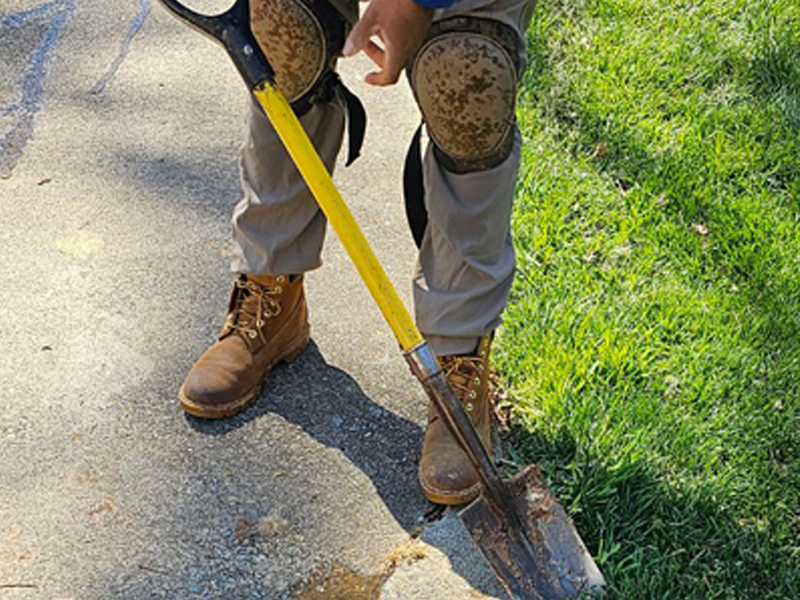
When one sprinkler zone has low pressure but the others work normally, the problem is usually somewhere within that zone rather than the home’s entire water supply.
Look for a leak first
A broken lateral pipe, cracked fitting or damaged head can release enough water to reduce pressure across the zone. Walk the zone while it runs and look for wet soil, bubbling water or unusually soft areas.
Compare the beginning and end of the zone
If heads nearest the valve are strong but performance fades farther downstream, a leak, restriction or excessive flow demand may be involved. If every head is equally weak, the valve may not be opening fully.
Check the valve
Debris, diaphragm problems or a partially closed flow-control setting can restrict water to the entire zone and mimic a pipe leak.
Look for recent changes
New nozzles with higher flow, added heads, landscaping work or a recent repair can change how much water the zone requires. A zone that used to perform well and suddenly becomes weak deserves different troubleshooting than one that has always been marginal.
Too much demand
If the total nozzle flow exceeds the available supply, the final heads may not rise or throw their intended distance. Correct nozzle selection matters.
Related guides
See underground leak signs, sprinkler valve problems, and our irrigation leak and pipe repair service.
Water-efficiency resource
EPA WaterSense recommends treating irrigation zones individually because sprinkler type, sun exposure, plants and soil can differ from zone to zone. EPA WaterSense