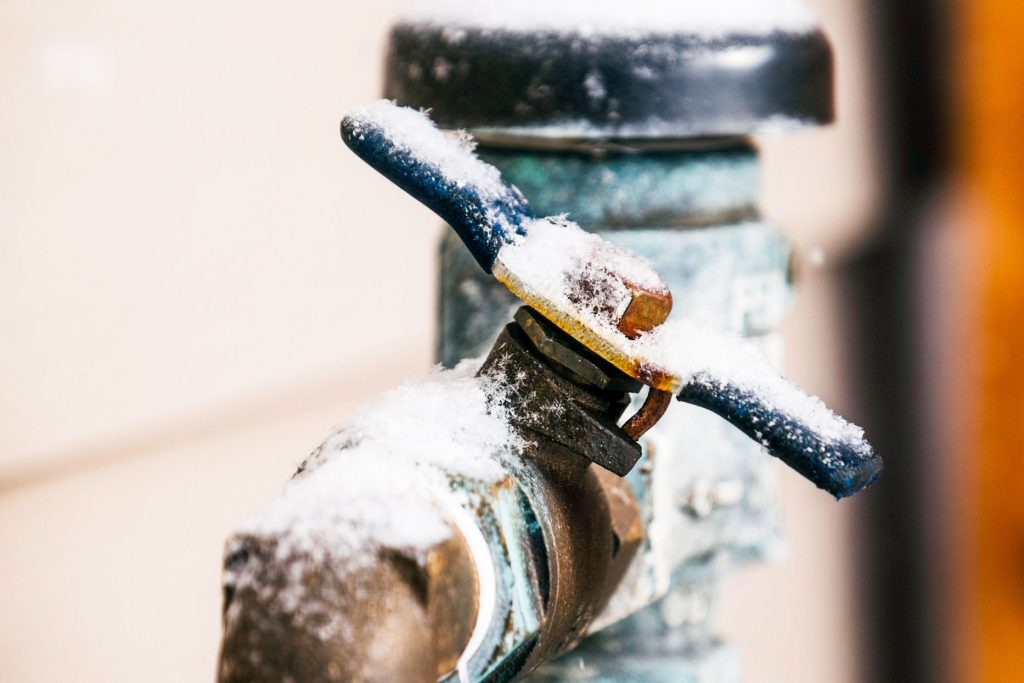
Michigan winters can damage irrigation systems because water expands when it freezes. Water left inside exposed plumbing, valves, fittings and sprinkler piping can create cracks that do not become obvious until spring.
Exposed components are especially vulnerable
Above-ground backflow assemblies, shutoff fittings and shallow components cool faster than pipe buried in soil. Water trapped in those parts can freeze and damage housings, bonnets or fittings.
Winterization is more than turning off the controller
Putting the controller in the off position stops scheduled watering, but it does not remove water from the irrigation system. A seasonal shutdown addresses the water supply, exposed plumbing and each irrigation zone.
Blowing out the system
Compressed air is used to move water from irrigation lines. The goal is controlled air volume and pressure—not simply using the highest pressure available. Excessive pressure can damage valves, fittings and sprinkler components.
When to winterize
Most homeowners want the system protected before sustained freezing weather while avoiding an unnecessarily early shutdown during a dry fall. Forecasts and system exposure matter more than one fixed date.
What if a freeze already happened?
One cold night does not automatically mean the system is damaged. Soil temperature, freeze duration, pipe depth and the amount of trapped water all affect risk.
Related guides
See what to do if winterization is late and our current Grosse Pointe winterization information.
Water-efficiency resource
EPA WaterSense recommends shutting off irrigation water and draining lines before freezing weather. EPA WaterSense home maintenance