
Late is better than ignoring the system
If freezing weather arrives before winterization, the priority is reducing exposure while arranging service as soon as practical.
Protect exposed components
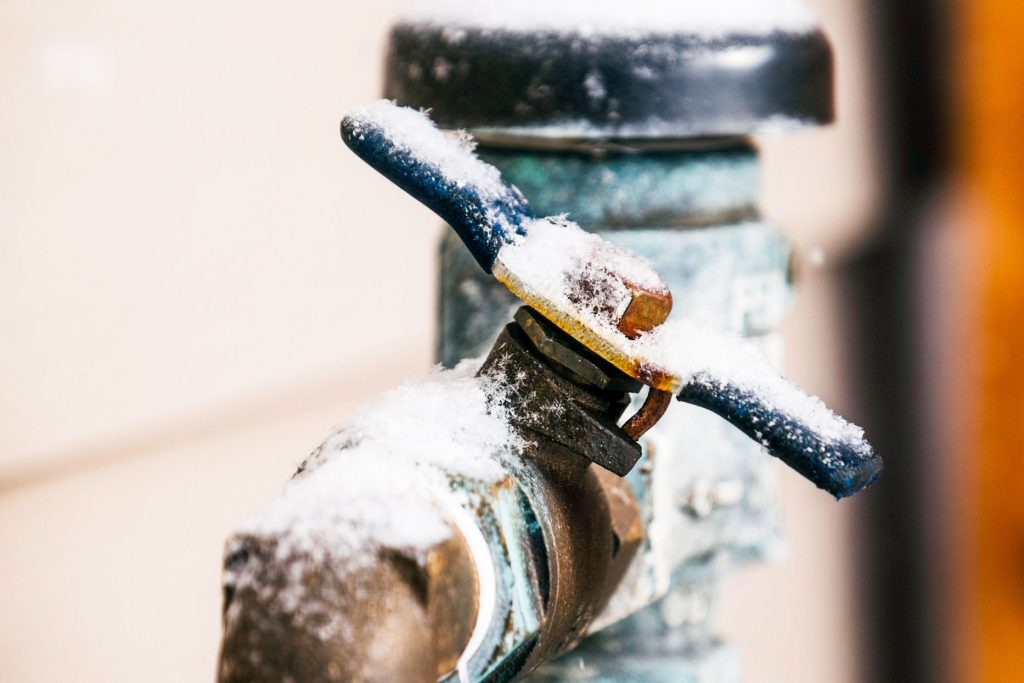
Above-ground backflow plumbing is especially vulnerable. Shutting the irrigation supply and draining accessible exposed components may reduce risk, depending on system design.
A freeze does not automatically mean everything is damaged
Soil temperature, duration of the freeze, pipe depth and remaining water all matter. A brief cold night is different from sustained deep freezing.
Do not use excessive compressed air
Trying to compensate for being late with excessive pressure can create its own damage.
Check current availability and service details on our sprinkler winterization page.
Cold-weather guidance
EPA WaterSense recommends winterizing irrigation systems by shutting off the water supply and draining lines before freezing weather. EPA WaterSense home maintenance
What to do after an unexpected freeze
Do not assume the entire system is ruined after one cold night. Inspect exposed backflow components for cracks or active leaks before restoring water. If a component is visibly damaged, leave the irrigation supply off until it can be repaired.
Why buried pipe is different
Soil moderates temperature, so buried lateral lines do not cool as quickly as exposed plumbing. Risk depends on pipe depth, soil temperature, how much water remains in the system and how long freezing conditions persist.
Schedule the blowout rather than experimenting with pressure
Winterization depends on controlled air volume and pressure. Excessive pressure can damage fittings, valves and sprinkler components.
Related guides
Read why sprinkler winterization matters in Grosse Pointe or see current winterization service information.